

The transportation, shipping, and logistics industry is involved in nearly every facet of the U.S. economy, from the transfer of goods between businesses (B2B) to the delivery of goods to consumers (B2C). As a result, it can be difficult to predict when demand for goods will decrease and the risk of business customers failing will increase. One early-warning tool for tracking growth and contraction cycles in the U.S. economy is bankruptcy filings.
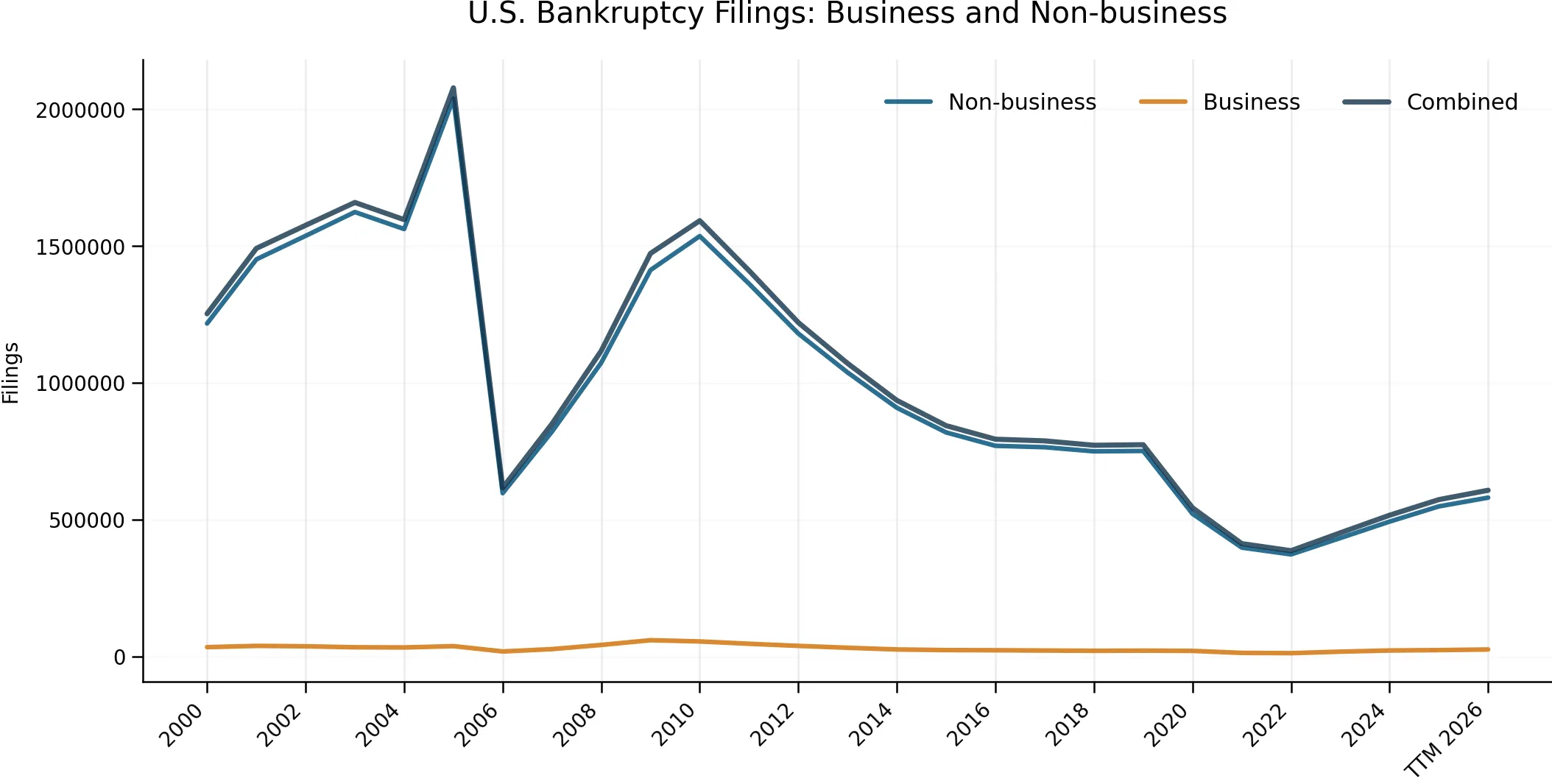
*Source: U.S. Courts bankruptcy filing statistics. The 2026 value is presented as trailing twelve months in the source draft.*
Using data from the United States Courts, Synter Resource Group analyzed current trends on a combined basis, a non-business basis representing B2C exposure, and a business basis representing B2B exposure. Several key takeaways emerged.
Bankruptcy Filings Are Rising Again
At first glance, the general trend in bankruptcy filings from 2010 forward appears reassuring because annual filings declined for many years. A closer look tells a different story. Combined annual bankruptcy filings bottomed out in 2022 and then increased at an approximately 14% compound annual growth rate through 2025. The last earlier period in the source data with at least three consecutive annual increases was associated with the Great Recession.
Although the current total remains well below Great Recession levels, the direction matters for companies whose revenue and cash flow depend on the movement of goods.
Why the Trend Matters for B2B and B2C Demand
On the B2B side, layoffs can signal that a business is unable to support its current expense structure. That may precede a larger restructuring or bankruptcy decision. On the B2C side, layoffs can reduce household spending as consumers make more difficult choices.
Lower employment can mean lower demand for goods, all else being equal. For transportation, shipping, and logistics companies, that combination can create a negative feedback loop: consumers buy less, business customers experience financial pressure, and invoices become harder to collect.
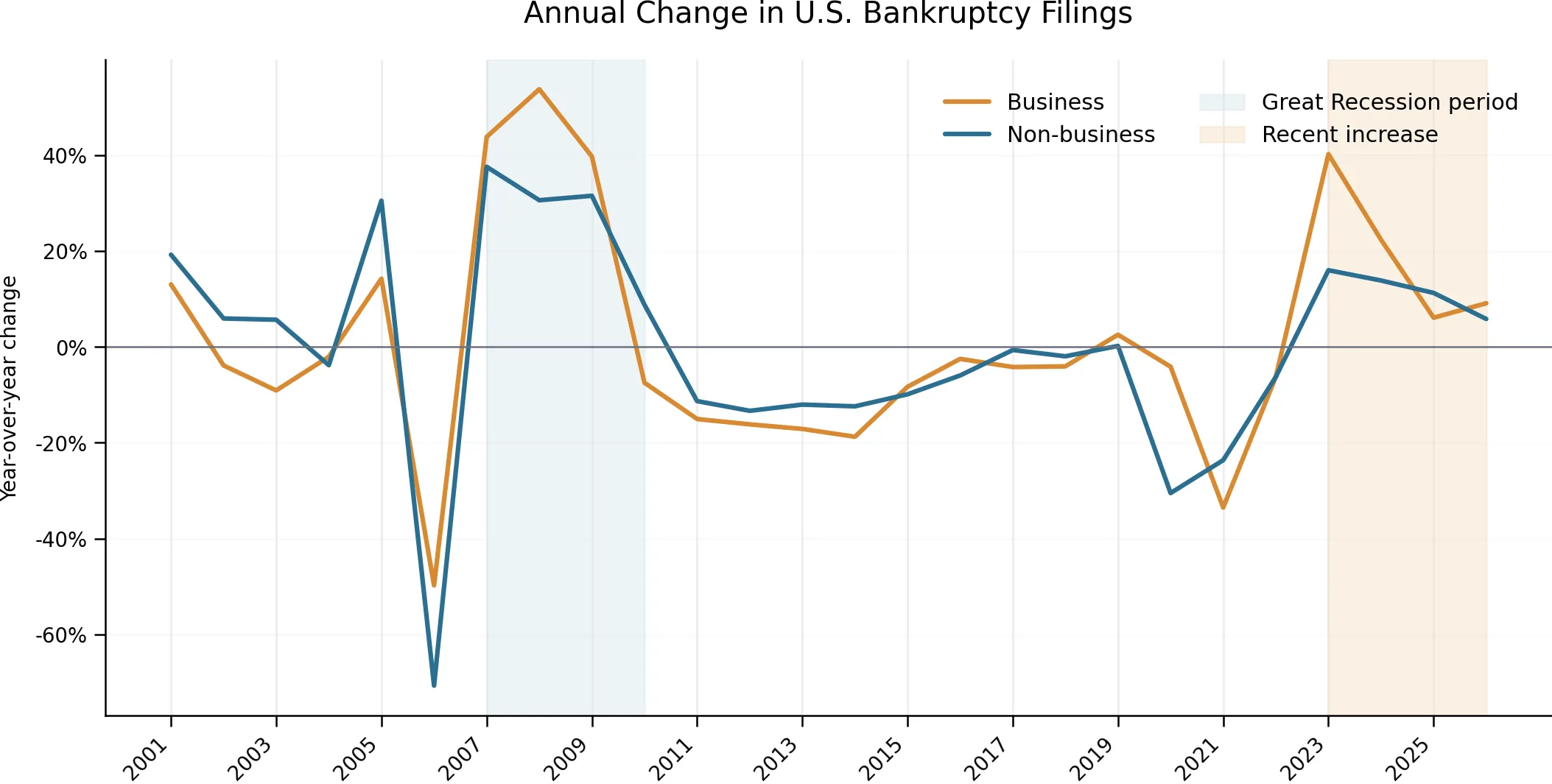
*Source: Calculated from the filing counts contained in the source draft.*
Non-business cases account for most bankruptcy filings, but the totals do not tell the entire story. Businesses provide employment, so a business bankruptcy may lead to layoffs that contribute to later individual filings. The annual rates of change for business and non-business filings generally move in a similar direction, but the source data highlights two periods when growth in business filings materially outpaced non-business filings: the Great Recession and the current period shown in the draft.
Four Steps TSP Companies Should Consider
1. Watch accounts receivable closely
Monitor aging statements and related financial metrics, including days sales outstanding, to identify potential billing and payment issues early.
2. Know when and how to begin collection activity
Document the protocol for initiating collection actions against business customers. Closely coordinate legal and compliance review when an account is affected by bankruptcy or a discharge of unsecured debt.
3. Prepare for repossession-related demand
A prolonged increase in bankruptcy filings may increase demand for repossession services. Confirm that every action respects any applicable court-ordered stay and that the client has proper authority to proceed.
4. Engage a collection partner before losses compound
Know when to bring in a collection agency if the capability does not already exist internally. An experienced partner cannot eliminate every loss, but can help reduce exposure and improve recovery efforts. Learn more about Synter's services.
Experience for Complex Collection Environments
Bankruptcy filings can provide useful insight into changing economic conditions and the risks facing transportation, shipping, and logistics companies. Synter Resource Group was established in 2002 and worked with TSP companies through the Great Recession, building practical knowledge for navigating complex collection environments.
Companies seeking a BPO partner that can help maximize the value of receivables, even in difficult situations, can learn more about Synter Resource Group or contact the team at sales@synter.com.